The AI revolution isn't coming—it's exploding right now. October 2025 marks a turning point where artificial intelligence stopped being a promising technology and became something genuinely transformative. Three massive breakthroughs are reshaping industries, and honestly? Everyone needs to understand what's happening.
Sora 2: When AI Creates Like Hollywood
OpenAI just launched something that should have gotten more attention. Sora 2, which rolled out on October 1, 2025, isn't just another incremental upgrade—it's the moment AI video generation became genuinely impressive.
Here's what makes it different. The original Sora from February 2024 was the "GPT-1 moment" for video—proof of concept that actually worked. Sora 2 is the "GPT-3.5 moment," meaning it's approaching real usefulness. The model understands physics in ways previous systems completely failed at. We're talking about gymnasts performing realistic Olympic routines, people doing backflips on paddleboards with accurate buoyancy dynamics, and skaters executing triple axels while holding a cat that actually maintains proper weight and balance.
But here's the game-changer—audio. Unlike earlier video generators that required separate audio editing, Sora 2 generates synchronized dialogue, ambient sound, and sound effects directly built into the video. Lip-sync accuracy? Check. Natural audio pacing? Included.
The social layer matters too. OpenAI built this around a TikTok-style app where creators can use "Cameos"—inserting themselves or other people they've invited into AI-generated scenes. You generate a video, publish it, and people can remix, comment, download, and see exactly what prompt created it. It's already climbing app store charts despite being invite-only in the US and Canada.

As of October 22, OpenAI expanded access so all users can generate 15-second videos, while Pro subscribers get 25 seconds and storyboard tools for scene-by-scene control. This isn't niche anymore—it's heading mainstream fast.
Frequently Asked Questions
AI Agents Just Became the Biggest Enterprise Trend
If Sora 2 is about creativity, AI agents are about business transformation. And the momentum is staggering.
Let's be clear on what an AI agent actually is—it's not a chatbot. A chatbot responds to questions. An AI agent continuously monitors situations, makes independent decisions, and takes actions based on predefined goals. It's the difference between asking "What's our Q4 sales pipeline status?" and having a system that constantly watches your CRM, flags stalled deals, schedules follow-ups, and drafts personalized outreach emails automatically.
Oracle just announced AI agents embedded in its Fusion Cloud Applications covering finance, HR, supply chain, and customer experience. They're not optional add-ons—they're built in at no extra cost and run on Oracle Cloud Infrastructure. Meta's building massive AI data centers in El Paso (scaling to 1GW of power) specifically to support AI agents and assistants.
Here's what matters: Gartner predicts 40% of enterprise applications will feature AI agents by 2026. We're already seeing use cases across customer service (73% of organizations adopting "Agent Assist" by year-end), IT operations (anomaly detection and auto-remediation), and collaboration platforms (meeting notes, task assignment). The technology is moving from experimental to essential.

According to recent enterprise surveys, over 80% of companies now believe "AI agents are the new enterprise apps," triggering major reconsiderations of their software investments. These aren't theoretical benefits—companies are reporting actual productivity gains, cost reductions, and service improvements happening right now.
Frequently Asked Questions
DeepSeek R1: The AI Model That Shouldn't Work (But Does)
Here's a plot twist nobody saw coming. In September 2025, a Chinese AI startup called DeepSeek released something that rattled the entire industry—DeepSeek-R1, a reasoning model that performs almost identically to OpenAI's advanced models but was trained for less than $6 million.
Let's digest what's actually remarkable here. DeepSeek-R1 has 671 billion total parameters, but only 37 billion activate in any single forward pass through the network. This "Mixture of Experts" architecture makes it efficient in ways Western models haven't achieved. The company actually published a 22-page paper explaining their training methodology—something the big labs almost never do because it reveals competitive secrets.
The reasoning capabilities are genuinely impressive. The model uses reinforcement learning and chain-of-thought training to solve complex problems step-by-step, thinking through problems mathematically and logically before providing answers. On benchmarks for math, coding, and reasoning, it competes with models that cost 17x more to train.
What makes this significant isn't just cost. It's the message: powerful AI doesn't require America's unlimited venture capital and energy resources. It challenges the assumption that only mega-funded labs can compete at the frontier. If other countries can build equivalent models at 5% of the cost, the competitive dynamics of AI shift fundamentally.
This is getting industry attention beyond just impressive benchmarks. It's forcing questions about the actual necessity of trillion-parameter models, about data efficiency, and about whether scale is really the only path to capability.
Healthcare, Video Generation, and Robotics: The Ripple Effects
While the headlines focus on Sora 2 and enterprise agents, other breakthroughs are equally important.
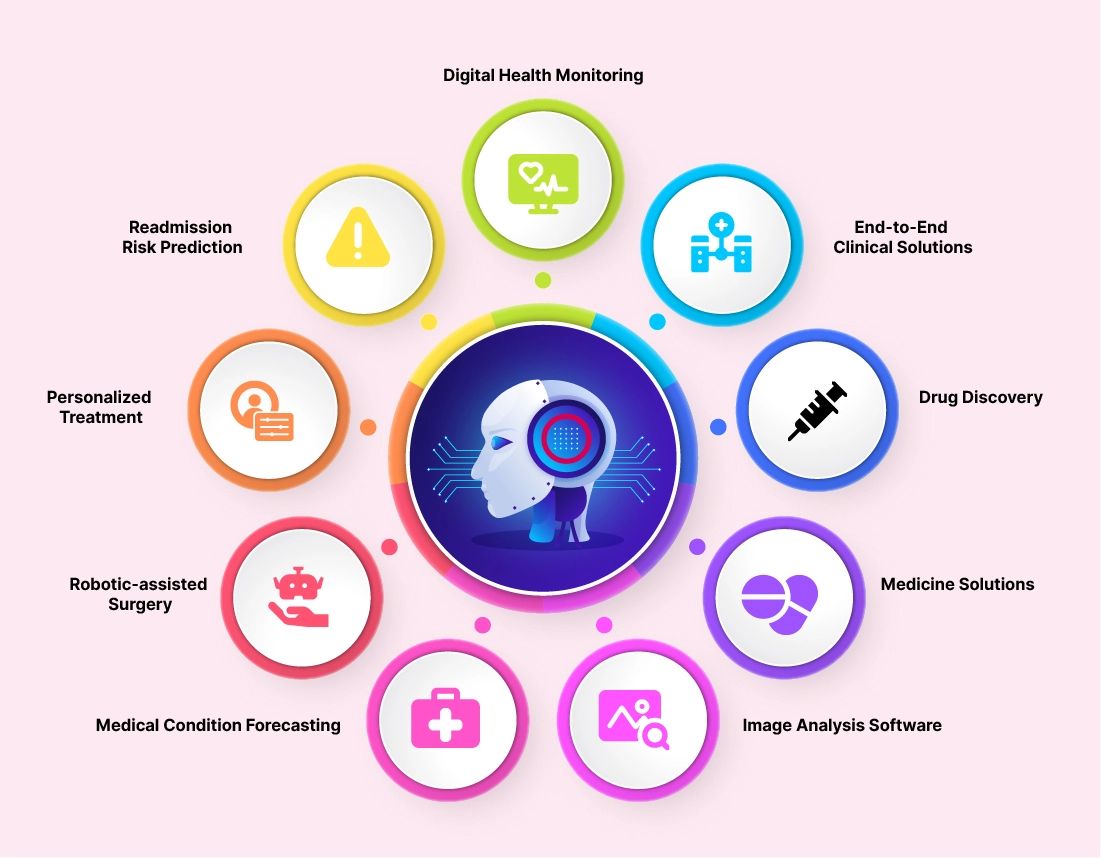
Google DeepMind's working on AI for cancer treatment optimization. Researchers developed "Delphi-2M," an AI model that predicts disease progression over decades by analyzing medical history, lifestyle, genetics, and BMI. It can estimate not just whether conditions occur, but when they'll likely emerge. That's personalized medicine shifting from theoretical to implementable.
On the robotics front, NVIDIA's H100 GPU is heading to space. Starcloud is launching AI-driven satellites designed to create orbital data centers for the planet's growing AI computation demands. This isn't science fiction—it's launching next month.
Meanwhile, Huawei's building agentic AI systems that make independent decisions. Samsung's tiny AI models are outperforming massive reasoning models on certain tasks. The field is fragmenting in interesting ways—not everything requires a 300-billion-parameter model trained on unimaginable compute.
Frequently Asked Questions
What This Actually Means for You
None of this is abstract future speculation. Sora 2's creating content people are actually consuming and sharing. Enterprise AI agents are running in production right now, making real business decisions. DeepSeek's reshaping expectations about what's possible with available resources.
The convergence matters. Video generation democratizes content creation. AI agents shift corporate workflows toward automation and efficiency. Cheaper, powerful models (DeepSeek) make AI accessible beyond mega-labs. More capable reasoning models tackle legitimate complexity in healthcare, science, and engineering.
By early 2026, these won't be "new AI breakthroughs"—they'll be normal infrastructure. The question isn't whether to pay attention. It's whether you'll navigate these changes proactively or react when they're already reshaping your industry.
The future of AI isn't coming in 2026 or 2027. It's here in October 2025, and it's moving faster than most people realize.
Want to stay ahead? Follow official announcements from OpenAI, DeepSeek, Google DeepMind, and enterprise AI leaders. Test Sora 2 if you create content. Track AI agent deployments in your industry. The competitive advantage goes to those who understand these transitions early—before they become inevitable.