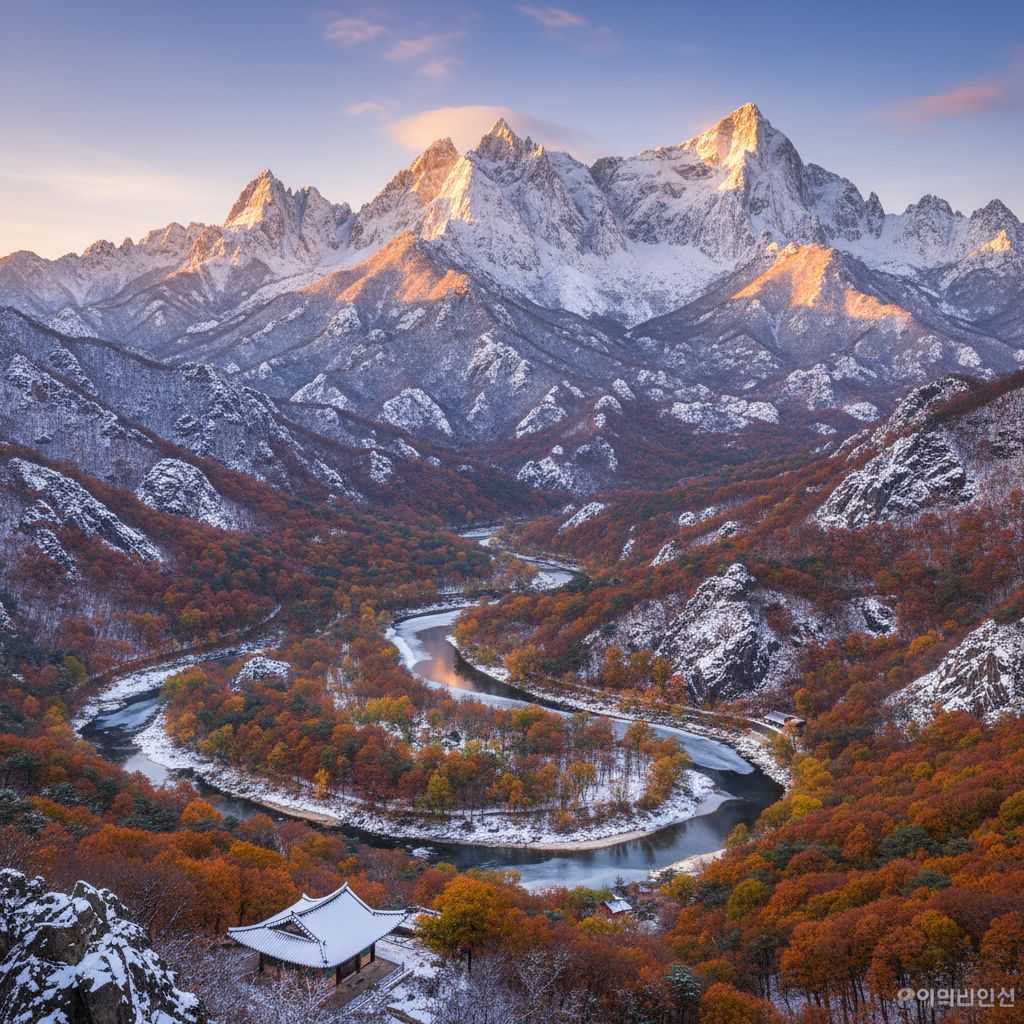
A dramatic cold snap has swept across South Korea, bringing the nation's first snowfall of the autumn season and sending temperatures plunging to their lowest levels since spring. On October 20, 2025, Mount Seorak witnessed the season's inaugural snow, marking an abrupt transition from pleasant autumn weather to near-winter conditions that caught many residents off guard.
Record-Breaking Cold Grips the Peninsula
The Korea Meteorological Administration (KMA) confirmed that South Korea experienced its coldest morning of the autumn season on Monday, October 20, with temperatures dropping 5 to 10 degrees Celsius compared to the previous day. Seoul recorded a morning low of 5.3°C—the coldest temperature since April and even lower than the city's average November low of 6.3°C.
The frigid conditions weren't limited to the capital. Eunpyeong District in northern Seoul saw temperatures fall to 3 degrees Celsius, while Gwacheon in Gyeonggi Province plummeted to just 1.4 degrees Celsius. In Paju, another city in Gyeonggi, the mercury dropped to 2.7°C, a full 4 degrees below the seasonal average.
Mount Seorak Welcomes Winter Early
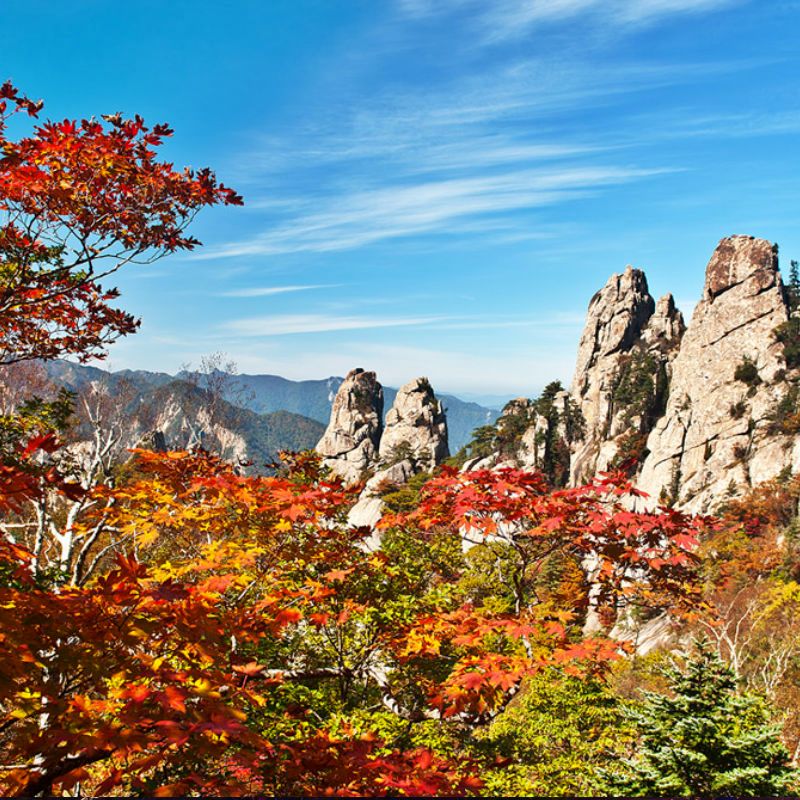
High in the mountains of Gangwon Province, Mount Seorak experienced sub-zero conditions, with temperatures plunging to minus 1.3 degrees Celsius at around 7 a.m., accompanied by wind chills that made it feel like minus 8.2°C. Snow began falling in the early morning hours, with approximately 1 centimeter accumulating near the Jungcheong shelter area.
"Snow began falling early on Monday morning, and around one centimeter accumulated near the Jungcheong shelter," confirmed the Seoraksan National Park Office.
This year's first snow on Mount Seorak arrived one day later than last year's October 19 snowfall, but one day earlier than in 2023. The KMA had predicted that mountainous areas in northern Gangwon Province above 1,200 meters in elevation would see approximately 1 cm of snowfall, a forecast that proved accurate as snow and rain mixed in regions including Seoraksan and Hyangnobong Peak.
A Cold Wave That Won't Quit
The cold snap shows no signs of relenting quickly. According to meteorological forecasts, temperatures are expected to dip even further on Tuesday, October 21, bringing the brief cold spell to its peak. Morning lows in Seoul were predicted to fall to around 4 degrees Celsius, with wind chills near 2 degrees Celsius.
In some parts of Gyeonggi Province—including Ganghwa, Siheung, Yangju, and Paju—the apparent temperature may drop to minus 1 degree Celsius, marking the first subzero wind chills of the season. The cold conditions are forecast to persist throughout the week, with morning lows between 1°C and 15°C and daytime highs ranging from 12°C to 22°C until October 26.
The coldest period is expected from October 23 to 25, when morning lows will hover between 6°C and 15°C, with highs remaining at 15°C to 22°C. This represents a significant departure from seasonal norms, with temperatures running 2 to 7 degrees Celsius below average.
What's Driving the Dramatic Temperature Drop?
The sudden cold wave is the result of a cold continental high-pressure system expanding from northern China over the West Sea (Yellow Sea). Cold air from the north swept down over the Korean Peninsula, bringing the abrupt temperature plunge that has transformed autumn into an early taste of winter.
This meteorological phenomenon represents South Korea's entry into the heart of autumn, as the country transitions between the summer North Pacific and Tibetan high-pressure systems and the winter continental high-pressure system. The onset of cold, dry winds signals this transitional period, which meteorologists consider the midpoint of the autumn season.
Adding to the chill, clear skies and minimal cloud cover have contributed to a "radiative cooling" effect, which efficiently releases heat from the earth's surface, causing temperatures to plummet even further, particularly in the early morning hours.
Safety Concerns for Mountain Hikers
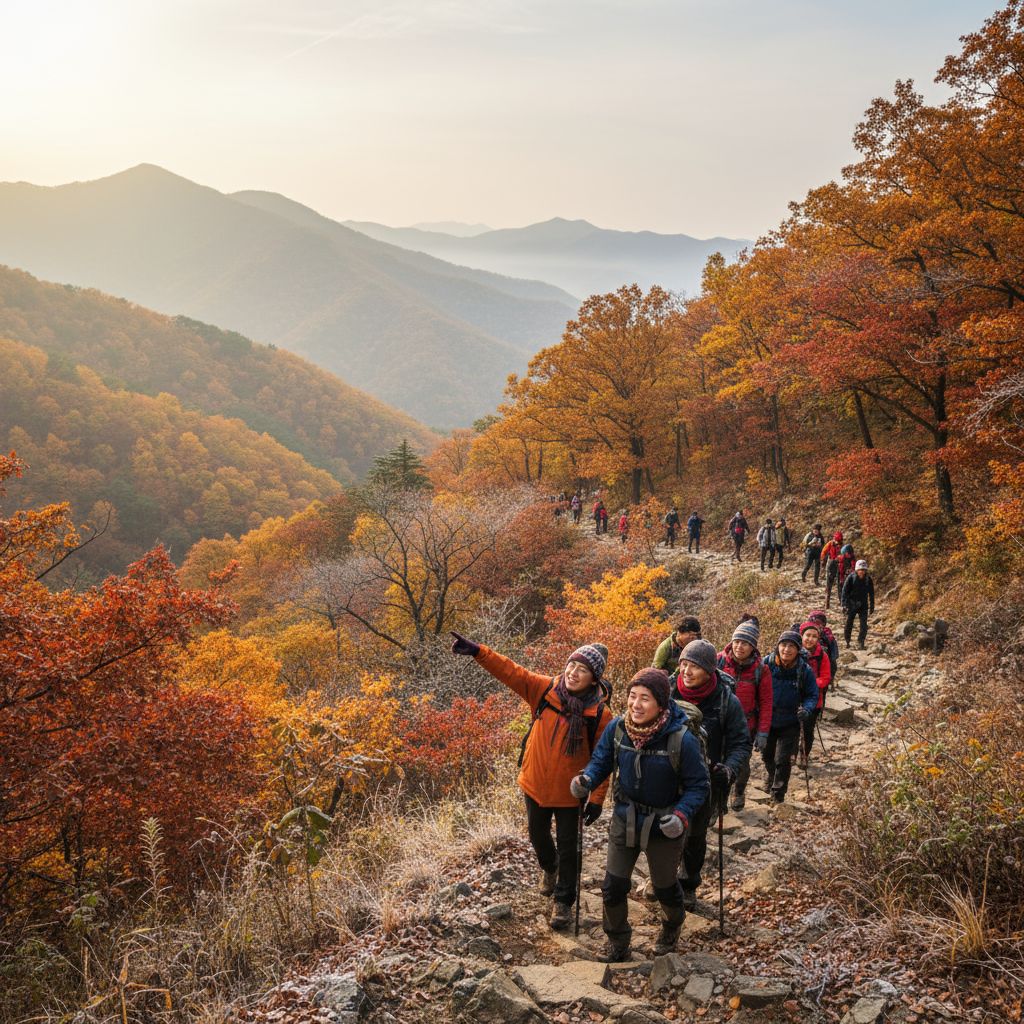
With the sudden arrival of snow and plummeting temperatures, authorities have issued warnings for hikers planning to explore South Korea's mountainous regions. Kim Gi-chang, head of disaster and safety at Seoraksan National Park, emphasized the risks associated with late-autumn hiking.
"Late-autumn hikes in Seoraksan National Park involve large temperature swings and heavy physical exertion, which can easily lead to major accidents due to low temperatures, so extra caution is needed," Kim warned. "Please check hiking hours under the entry time designation system, use designated trails with well-established guidance systems, and, if possible, hike in groups of two or more".
The combination of snow, ice, and subfreezing wind chills creates hazardous conditions on mountain trails, with slippery surfaces and increased risk of hypothermia for unprepared hikers.
Impact on Autumn Foliage and Tourism
Interestingly, the cold temperatures may have a silver lining for those hoping to witness South Korea's spectacular autumn colors. Leaves begin to change when nighttime lows fall below 5 degrees Celsius, and the recent cold snap is expected to accelerate the color transformation.
The foliage front is projected to move southward from Seoraksan between late October and early November, though ironically, the mountain's autumn leaves have yet to reach their peak despite the arrival of snow. This year's first foliage appeared at Seoraksan Mountain on September 30, with peak colors expected around October 23.
Popular autumn destinations near Seoul—including Nami Island, The Garden of Morning Calm, and Bukhansan National Park—are expected to reach peak foliage in early November, providing stunning backdrops for visitors willing to brave the cold.
A Pattern of Extreme Weather
South Korea has faced a series of extreme weather patterns throughout 2025, from scorching summer heat waves that pushed temperatures past 40 degrees Celsius in early July to devastating floods in July and August that claimed at least 23 lives. The country recorded its first-ever July temperatures exceeding 40°C in Gwangmyeong and Paju, cities just outside Seoul.
Climate researchers have documented significant changes in South Korea's weather patterns. A 45-year study by scientists at Ewha Womans University confirmed the emergence of an autumn rainy season, with cumulative rainfall between September 10 and October 10 increasing by 42 percent since 1998. The shift is being driven by changes in typhoon activity caused by climate change, with fall typhoons becoming more frequent and intense.
Asia as a whole is currently warming nearly twice as fast as the global average, according to the World Meteorological Organization, fueling more extreme weather events and wreaking havoc on the region's economies and ecosystems.
Looking Ahead: Winter on the Horizon
Until October 29, clear skies are expected nationwide without significant rain, creating ideal conditions for enjoying autumn leaves despite the cold. However, the KMA has issued warnings about frost formation in inland and mountainous areas, with the ground potentially freezing or becoming damp overnight.
The sudden cold spell serves as a stark reminder that winter is rapidly approaching. Residents are advised to prepare winter clothing and take precautions against the cold, particularly during morning and evening hours when temperatures drop most dramatically.
For comparison, last November, Seoul experienced record-breaking snowfall, with 16.5 cm falling on November 27, 2024—the heaviest November snowfall since records began in 1907. While it's too early to predict if this winter will bring similar extremes, the early arrival of cold conditions suggests South Korea should brace for a potentially harsh winter season ahead.