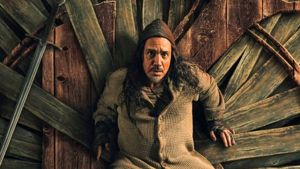
After four years of waiting since the first film gathered 2.6 million viewers, Alexandre Astier returns with Kaamelott – Deuxième Volet [Partie 1], released on October 22, 2025. But this long-awaited sequel to the cult French series has sparked a wave of divided reactions, with critics pointing to significant narrative and pacing problems despite an undeniably impressive visual spectacle.
A Fragmented Epic That Loses Its Way
The second installment picks up six months after Arthur's victory over Lancelot, with the Kingdom of Logres in ruins and the gods furious at Arthur's refusal to kill his enemy. To prove their worth, Arthur sends his knights—both veterans and novices—on parallel quests across the known world, from frozen northern lands to Mediterranean ports.
This dispersed narrative structure becomes the film's greatest weakness. As Le Monde notes, the mise-en-scène from Alexandre Astier often lacks momentum, with a "very frontal" direction that fails to inspire adherence despite some savory gags. Critics consistently describe the experience as watching only half a story, with the 139-minute runtime feeling simultaneously too long and incomplete.
Les Inrocks delivers a particularly harsh assessment, calling it "lourdingue et purement accessoire" (cumbersome and purely accessory), criticizing the film for refusing to truly start, instead serving primarily as a teaser for Part 2, scheduled for November 11, 2026. The film inhabits what the publication describes as an "interstitial void"—no longer quite a comedy, not yet truly an epic.
The Pacing Problem and Overambitious Scope
Perhaps the most consistent criticism concerns rhythm and narrative momentum. Le Figaro bluntly titles its review "Morbleu, quel navet!" (Good grief, what a turkey!), lamenting that Astier has lost the satirical and jovial flame of the original series. The verdict: "We're bored stiff".
Abus de Cinéma echoes this sentiment, noting the film achieves neither novelty nor winning formula, instead delivering "mollassonne redite" (flaccid repetition) of everything already developed. The review suggests the entire film could be summarized in 15 minutes, with nothing advancing despite its length.
With over 70 characters populating this sprawling narrative, the film struggles to give meaningful screen time to anyone. Major stars like Alain Chabat and Christian Clavier are reduced to mere cameos, while new generation characters fail to engage. The notable absence of Perceval—actor Franck Pitiot chose not to return—leaves a significant gap, particularly in scenes with Karadoc, who loses much of his comedic chemistry.
Visual Spectacle Meets Technical Ambition
Despite narrative shortcomings, the film's technical achievements earn genuine praise. Shot over eight months in France, Malta, and Iceland with a staggering budget of 19 million euros per part (38 million total), this production ranks as one of France's most expensive of the year.
Reviewers consistently highlight the improved visual presentation. Reddit users praised the "magnificent, living, moving" sets with abundant extras, noting costumes achieve better balance between fantasy and medieval aesthetics. L'Internaute acknowledges that while they laughed less, "we feast our eyes!"—with décor, costumes, music, and special effects justifying the big-screen adaptation.
The visual effects team, including companies like Cousin Bizarre, Add Fiction, and RodeFX, delivered significantly higher quality work than the first film. Alexandre Astier himself noted that modern technology finally allows him to realize the fantasy elements he could only hint at during the television series era, when budgets couldn't even afford to show a dragon on screen.
A Film Caught Between Two Identities
Astier has repeatedly stated that "Kaamelott was never a comedy", positioning this installment as the darker middle chapter—his "Empire Strikes Back". The filmmaker structured the two parts as a single continuous work with no narrative gap between them, comparable to "a big book cut in two, a long show with intermission".
This ambition becomes both strength and weakness. Première describes the film as "ambitious and innovative, despite rhythm problems," praising Astier's attempt to create a grand-format adventure comedy mixing Gérard Oury and Peter Jackson influences. The publication notes the first film felt "rushed" and unfinished after 12 years of waiting, making this sequel feel like "warm-up" for the real story now beginning.
Yet this structure frustrates viewers expecting narrative resolution. The film ends on a cliffhanger, forcing audiences to wait over a year for closure. Le Point observes that this second installment "serves, with some nuances, the same defects and qualities as the previous film," suggesting Astier hasn't learned from prior criticisms.
The Challenge of French Fantasy Cinema
Beyond individual critique, this film carries broader implications for French genre cinema. Journal du Geek frames the central question: "Is it possible to make ambitious fantasy in France?" With the cultural industry still reluctant to embrace genre propositions, Kaamelott carries not just its own weight but represents "a baptism by fire for French-made fantasy".
The film attempted to expand beyond the loyal fanbase that made the television series a cultural phenomenon. Astier himself acknowledges two types of fans: those who embrace the evolving universe and those who demand replication of familiar elements. This sequel seemingly satisfies neither camp fully, caught between evolution and repetition.
Production Challenges and Creative Decisions
The production faced significant hurdles. Alexandre Astier works in a notably unconventional manner—actress Audrey Fleurot revealed that actors don't receive scripts, discovering scenes only in the makeup chair. While this approach preserves the spontaneous spirit of the original series, it may contribute to the film's structural issues.
The absence of Perceval forced substantial rewrites. Initially saddened, Astier claims the constraint ultimately improved the story: "I'm very happy to tell it this way now... it probably pleases me more than what would have been the case if nothing had changed". However, fans mourned the loss of this beloved character, whose partnership with Karadoc formed one of the series' comedic foundations.
Box Office Uncertainty in Challenging Times
Released during a difficult period for French cinema—the first half of 2025 saw box office drop 10% to 76 million tickets without a massive success—Kaamelott 2 faces pressure to justify its enormous budget. Industry observers hoped it could help save 2025's theatrical performance, but early reception suggests this may be optimistic.
The first film's 2.6 million viewers during the pandemic represented solid performance, making it 2021's fifth most-watched film. However, compared to recent French blockbusters like Un P'tit truc en plus (9 million) or Le Comte de Monte-Cristo (10 million), that figure reveals the challenge Astier faces in breaking beyond his devoted fanbase to mainstream blockbuster status.
The Dialogue Debate
Interestingly, opinions diverge on Astier's trademark element: dialogue. Journal du Geek praises the "musicality of dialogues" and "savory writing" close to theater, noting jokes may be less numerous but conversations remain central to the process. The series' distinctive verbal humor—mixing anachronistic modern language with Arthurian legend—built its reputation.
Yet YouTube reviewer critiques describe the dialogues as "minables" (pathetic) with "blagues pouraves" (lousy jokes). This split likely reflects the fundamental tension: long-time fans appreciate Astier's specific linguistic style, while newcomers or those hoping for evolution find it repetitive.
Critical Consensus: Ambitious but Flawed
Major French publications delivered lukewarm-to-negative verdicts. Le Monde rated it "Pourquoi pas" (Why not), acknowledging the difficulty of judging half a story. The publication notes Astier announced this trilogy back in 2009, making Part 1's release in 2021 already delayed, and now audiences must wait until 2026 for narrative conclusion.
IMDb audiences proved slightly more generous, awarding 6.6/10 based on early reviews, while Letterboxd users offered mixed reactions ranging from enthusiasm for the expanded scope to frustration with pacing.
The fundamental issue remains: this is explicitly designed as an incomplete experience, the first act of a two-part story. Whether critical opinion improves when audiences can view the complete 4-5 hour narrative remains an open question.
A Fantasy at the Crossroads
Kaamelott – Deuxième Volet [Partie 1] represents an fascinating case study in ambitious French genre filmmaking. Astier has undeniably expanded his universe, delivering visual spectacle that justifies the cinematic medium. The budget shows on screen through impressive locations, improved effects, and production design that brings this medieval fantasy world to vibrant life.
Yet the film struggles under the weight of its own ambitions. The choral structure with 70+ characters across parallel quests creates narrative diffusion rather than epic scope. Pacing issues plague a story that feels simultaneously overstuffed and incomplete. The absence of key characters like Perceval creates gaps that new additions cannot fill.
Most critically, the decision to split a single story across two releases with a year-long gap risks alienating audiences already frustrated by Part 1's lack of resolution. In an era when viewers increasingly value narrative completion and binge-watching, asking audiences to return after 13 months for the second half represents a significant commercial gamble.
For devotees of the Kaamelott universe, this remains essential viewing despite flaws—an opportunity to revisit beloved characters in a more technically accomplished presentation. For casual viewers or those seeking tight narrative filmmaking, the wait for Part 2 before judgment seems prudent. And for French fantasy cinema hoping to establish itself as a viable genre, Kaamelott's struggles suggest the road ahead remains challenging, regardless of budget or talent behind the camera.
Alexandre Astier's vision deserves credit for ambition and technical execution. Whether that vision ultimately succeeds will only become clear when both parts can be evaluated as the unified whole Astier intended. Until November 2026, Kaamelott 2 remains a promising but frustrating fragment—spectacular to look at, yet incomplete at its core.