
Artificial intelligence has moved beyond the realm of simple chatbots and automated replies. The technology is entering a transformative phase marked by autonomous intelligence—systems that can perceive their environment, make decisions, plan actions, and adapt in real-time without constant human oversight. These AI agents are no longer confined to answering questions; they're actively solving problems, managing workflows, and even operating in the physical world through advanced robotics.
The Rise of AI Agents: From Automation to Autonomy
The shift from traditional automation to agentic AI represents one of the most significant evolutions in artificial intelligence. Unlike earlier models that required continuous human intervention, modern AI agents operate independently, learning continuously and executing complex tasks with minimal supervision.
These systems function through what experts call the perceive, reason, act, and learn (PRAL) loop—a cognitive framework that enables agents to operate with intelligence, accountability, and adaptability. This iterative process transforms AI from static automation into dynamic, memory-driven intelligence that evolves alongside business needs.
Enterprise adoption is accelerating rapidly. Most agentic AI applications remain at foundational levels, with a growing number exploring partially autonomous operations within narrow domains. What distinguishes truly autonomous agents is their capacity to reason iteratively, evaluate outcomes, adapt plans, and pursue goals without ongoing human input.
OpenAI's Tasks Feature Challenges Virtual Assistant Giants
OpenAI recently introduced a groundbreaking beta feature called "Tasks" for ChatGPT, marking its bold entry into the virtual assistant space and putting it in direct competition with established players like Apple's Siri and Amazon's Alexa.
The Tasks feature allows users to schedule future actions, including one-time reminders for events like concert ticket sales or recurring tasks such as weekly news summaries and daily weather reports. Once scheduled, ChatGPT automatically carries out these actions at designated times, streamlining daily task management.
To use Tasks, subscribers select "GPT-4o with scheduled tasks" from the model picker and specify what they want done and when. The system can even suggest tasks based on user conversations, though users must explicitly approve these suggestions. ChatGPT is rolling out this feature to Plus, Team, and Pro users globally, starting with the web platform.
Google's Gemini Robotics: Bringing AI Into the Physical World
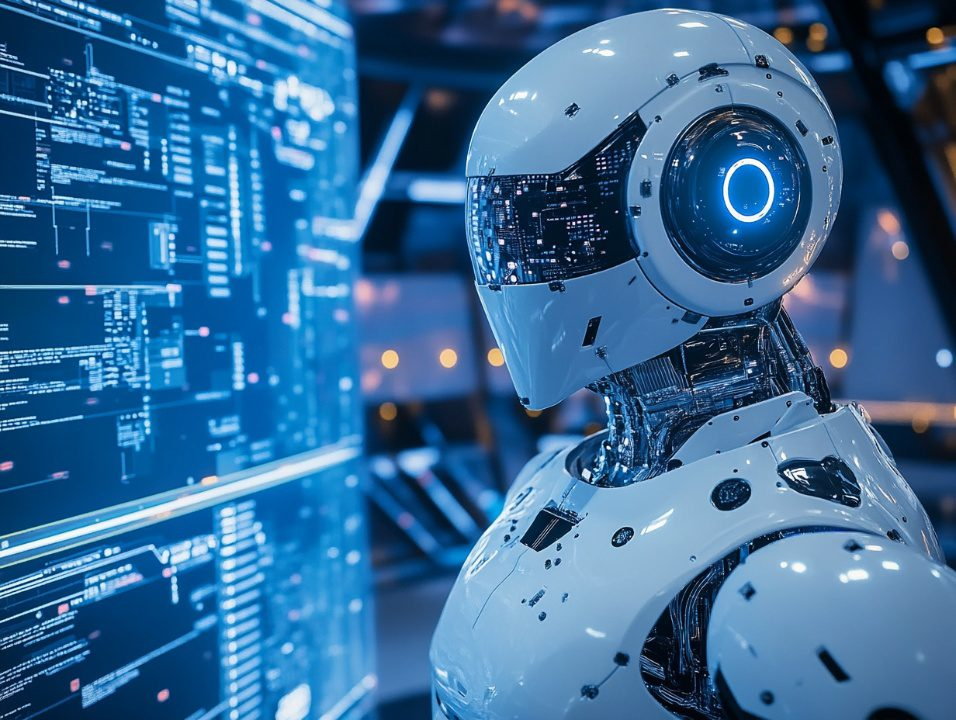
Perhaps no development better illustrates AI's physical transformation than Google DeepMind's Gemini Robotics, introduced as a groundbreaking technology revolutionizing how robots interact with humans in both industrial and domestic environments.
Gemini Robotics represents a fundamental breakthrough by integrating vision-language-action (VLA) models that enable robots to understand multimodal inputs—text, images, and real-time sensor data—and translate them directly into physical actions. A robot can receive a broad command like "pack my lunch" and generate the precise sequence of motor controls needed to execute the task.
The system excels in three areas that have traditionally challenged robotics:
Generality: The model can generalize to novel situations, objects, and tasks never encountered during training. It leverages Gemini's vast world understanding to reason about unfamiliar scenarios, significantly outperforming previous state-of-the-art models on generalization benchmarks.
Interactivity: Robots can understand and respond to conversational commands and adapt on the fly. If someone moves an object or gives a new instruction mid-task, the robot can replan and continue without needing to be reset—crucial for operating in dynamic human environments.
Dexterity: The model enables robots to perform complex, multi-step tasks requiring fine motor skills, such as folding origami, zipping bags, or carefully preparing salads—tasks deceptively simple for humans but incredibly difficult for traditionally programmed robots.
A crucial innovation is the integration of an intermediate reasoning layer between input and output, designed to analyze physical space and enforce safety protocols, ensuring every action is evaluated in real-time before execution. The outputs are generated as a continuous stream, dynamically adjusting based on real-time input data.
Gemini Robotics 1.5: Enhanced Reasoning for Complex Tasks
The latest iteration, Gemini Robotics 1.5, represents a massive step forward in creating truly general-purpose robots. For the first time, a single model can power an entire family of robots, enabling them to plan, think, and even use tools to solve complex, multi-step tasks.
Key advancements include enhanced reasoning capabilities that allow robots to break down broad tasks, think step-by-step, and understand their environment more clearly. The systems can now tackle longer, more complex challenges like sorting laundry or resetting scenes after secret changes. Most impressively, Gemini-powered robots can use the internet to find information and solve problems, such as sorting waste according to local guidelines.
The Infrastructure Powering the AI Revolution
Data Centers: The Engine of AI Innovation
The data center industry stands at a transformative precipice, driven by artificial intelligence's relentless advancement. AI demand continues building momentum, with global data center construction at record levels.
At the core of this revolution is rapid advancement in semiconductor technology. A computation task that used to require thirty-two hours can now be accomplished in just one second with the latest GPU technology. Given these increasing processing speeds, AI programs can train on exponentially larger datasets, making the entire AI ecosystem more valuable.
Eight major hyperscalers expect a forty-four percent year-over-year increase to $371 billion for AI data centers and computing resources. By 2035, power demand from AI data centers in the United States could grow more than thirtyfold, reaching 123 gigawatts, up from just four gigawatts.
OpenAI, Oracle, and SoftBank recently announced five new U.S. AI data center sites under Stargate, OpenAI's overarching infrastructure platform. The combined capacity brings Stargate to nearly seven gigawatts of planned capacity and over $400 billion in investment over the next three years, putting the initiative on track to secure its full $500 billion, ten-gigawatt commitment ahead of schedule.
Microsoft's Fairwater AI datacenter in Wisconsin stands as a remarkable feat of engineering, covering 315 acres with three massive buildings totaling 1.2 million square feet. Unlike typical cloud datacenters optimized for many smaller workloads, this facility is built to work as one massive AI supercomputer using flat networking interconnecting hundreds of thousands of the latest NVIDIA GPUs, delivering ten times the performance of today's fastest supercomputer.
Breakthrough Chip Technologies Reducing Energy Demands
AI's massive energy consumption has prompted urgent innovation in chip design. Engineers have created a breakthrough computer chip that relies on light rather than electricity to carry out one of the most energy-demanding functions in artificial intelligence: identifying images and detecting patterns.
By shifting to light, the chip requires far less energy, achieving efficiencies ten to one hundred times greater than today's chips running the same calculations. This innovation could ease the massive strain AI places on power grids while supporting development of more advanced AI models.
The chip uses miniature Fresnel lenses and converts machine learning data into laser light on-chip, passing it through lenses before converting results back into digital signals. In early trials, the chip achieved approximately ninety-eight percent accuracy when recognizing handwritten digits, matching conventional electronic chip performance.
Chinese scientists achieved another breakthrough by developing the world's first carbon-based microchip capable of running artificial intelligence tasks using a novel ternary logic system. The carbon nanotube transistor chip processes data not just in ones and zeros but also a third state, enabling computations to occur faster and with less energy.
Microsoft successfully tested microfluidics cooling that removed heat up to three times better than cold plates, commonly used today. The system brings liquid coolant directly inside silicon—where heat originates—using tiny channels etched on chip backs. Tests showed microfluidics reduced maximum temperature rise inside GPUs by sixty-five percent.
Multimodal AI: Understanding the World Like Humans Do
Multimodal AI refers to systems that can process and combine multiple input types—vision, language, and sound—to produce more accurate and natural outputs. Unlike traditional AI models focusing on one mode, multimodal AI learns from and integrates diverse data sources.
This integration enables context-rich responses by blending text meaning with visual cues, better decision-making using fuller situation pictures, and smarter automation in areas like customer service, healthcare, and education.
Foundation models like Gemini and GPT-4o lead this charge, seamlessly juggling text and images in ways past systems couldn't. Vision Transformers break images into tiny patches—visual tokens—so transformer models can process pictures like sentences. Audio Transformers turn sound waves into spectrogram images, applying the same computational magic to hearing audio patterns.
Emerging trends include agentic AI with multimodal reasoning that combines input-delivery patterns such as video feeds, spoken instructions, and written prompts to achieve complex objectives. Real-time context switching allows AI to move from voice command recognition to image analysis to text-based answers. Multimodal search and recommendation systems combine user behavior with voice queries and visual cues to deliver hyper-personalized results.
Edge AI: Intelligence Moving Closer to Home
Edge AI handles data directly on devices or at network edges rather than relying on centralized cloud processing. This innovation brings a new era of efficiency, privacy, and responsiveness across consumer electronics to industrial machinery.
Devices like smartphones, surveillance systems, medical equipment, and autonomous vehicles can now execute complex AI tasks locally thanks to advancements in chip design, especially low-power and high-performance computing.
Processing needs must become faster and more effective as connected devices produce exponentially more data. Cloud computing can't always satisfy the demand for real-time insights despite its benefits. Edge AI significantly reduces latency and bandwidth consumption by combining real-time data processing advantages with machine learning strength.
NVIDIA's Jetson AGX Orin delivers up to 275 TOPS (trillions of operations per second) of AI performance, packing a twelve-core Arm Cortex-A78AE CPU alongside a 2048-core NVIDIA Ampere GPU with sixty-four Tensor Cores and up to sixty-four gigabytes of LPDDR5 memory. This massive compute enables complex neural networks and multiple concurrent AI pipelines at the edge for demanding applications like autonomous robots, drones, and advanced computer vision systems.
Embedded systems are evolving from passive data gatherers to autonomous decision units. For the Internet of Things, this means sensors and actuators that can detect anomalies, localize control, adapt to environment changes, and act without waiting for remote commands. In electric vehicles, subsystems like driver assistance, battery management, predictive maintenance, and cabin intelligence can run critical inference tasks locally, improving responsiveness and robustness.
AI Transforming Healthcare Diagnostics
AI diagnostics has evolved from emerging technology to an essential component of modern healthcare systems. By leveraging machine learning and deep learning algorithms, AI diagnostic tools can process vast amounts of medical data swiftly and accurately, providing healthcare providers with invaluable insights for better patient care.
AI-powered imaging tools help detect anomalies in X-rays, CT scans, MRIs, and ultrasounds. Convolutional neural networks are essential for assessing medical images and detecting illnesses such as lung nodules, brain malignancies, and fractures. These AI technologies reduce radiologists' burden while increasing diagnostic accuracy by minimizing human error and enhancing efficiency.
In advanced stroke AI adoption settings, the diagnostic journey starts with AI producing recommendations based on processing MRI/CT imaging, seen simultaneously by the entire stroke team. The automated AI diagnosis is produced, distributed, and read ahead of clinician diagnosis, with AI highlighting vessel occlusions and suggesting percentages of brain potentially affected by stroke.
Studies show AI automated repetitive tasks such as lesion detection, image segmentation, and morphological analysis, reducing diagnosis time by over ninety percent in some cases and data volume by over eighty-five percent, greatly improving workflow efficiencies. It delivers reliable and repeatable results with significant reduction in volatility owing to differences in clinician expertise.
Stanford Medicine developed a wireless eye implant that restored reading ability to people with advanced macular degeneration. The PRIMA chip works with smart glasses to replace lost photoreceptors using infrared light, with most trial participants regaining reading capability.
Quantum Computing Meets AI: The Next Frontier
Google DeepMind recently announced research showing—for the first time in history—that a quantum computer can successfully run a verifiable algorithm on hardware, surpassing even the fastest classical supercomputers by 13,000 times. The Willow quantum chip demonstrated the Quantum Echoes algorithm, which can compute molecular structure and paves a path toward real-world applications.
Quantum computing uses qubits instead of classical bits. Unlike classical computers processing information in binary, qubits can exist in multiple states simultaneously due to superposition. Combined with entanglement and quantum interference, qubits can process and analyze vast amounts of data in parallel.
Quantum AI can help solve complex optimization problems faster in logistics, finance, and material science. It can improve natural language processing by quickly analyzing large text datasets and speed up drug discovery by identifying molecular structures and predicting how new drugs interact with the human body.
Researchers' near-term realistic aim for quantum AI is creating quantum algorithms that perform better than classical algorithms. The contribution of quantum computing to classical machine learning can be achieved by quickly presenting optimal solution sets of artificial neural network weights.
IBM's quantum research team found that entangling qubits on quantum computers running data-classification experiments cut error rates in half compared to unentangled qubits. As quantum computers improve at harnessing and entangling qubits, they'll also improve at tackling machine-learning problems.
Enterprise AI Adoption Accelerates
Enterprise adoption of generative AI continues its explosive growth. Nearly eighty percent of companies report using it, though many still see limited bottom-line impact. Organizations are beginning to take steps that drive bottom-line impact—redesigning workflows as they deploy gen AI and putting senior leaders in critical AI governance roles.
LLM budgets have grown ahead of enterprises' already high expectations from a year ago, with enterprise leaders expecting average growth of approximately seventy-five percent over the next year. As one CIO noted, "what I spent in 2023 I now spend in a week".
Spend growth is driven partially by enterprises discovering more relevant internal use cases and increasing employee adoption. Customer-facing use cases are beginning to emerge, especially for tech-forward companies, with potential to drive exponential spend growth.
The number-one business activity augmented by generative AI is customer issue resolution, appearing in thirty-five percent of 530 enterprise generative AI projects identified across 2022, 2023, and 2024. Organizations are working to mitigate a growing set of gen-AI-related risks while hiring for new AI-related roles and retraining employees to participate in AI deployment.
Google has seen a surge in developer adoption, with sixty-nine percent reporting Google model usage in the first quarter compared to OpenAI's fifty-five percent. Emerging players like DeepSeek have seen rapid growth, with seventeen percent adoption and eighty percent of respondents reporting openness to workplace use.
AI Safety, Ethics, and Regulation Take Center Stage
As AI becomes more powerful, global leaders race to implement policies protecting the public while allowing innovation to flourish. The European Union leads with the AI Act, which classifies AI systems by risk level and imposes strict requirements for high-risk uses. The United States takes a sector-based approach, letting industries like healthcare and finance create specialized rules, while China prioritizes state-led oversight and algorithm transparency.
The AI Act defines four risk levels for AI systems. Unacceptable risk includes AI systems considered clear threats to safety, livelihoods, and rights—including harmful AI-based manipulation, social scoring, untargeted facial recognition database creation, emotion recognition in workplaces and education, and real-time remote biometric identification for law enforcement in public spaces.
High-risk AI systems are subject to strict obligations before market release, including adequate risk assessment and mitigation systems, high-quality datasets feeding systems to minimize discriminatory outcomes, logging of activity to ensure traceability, detailed documentation for authority assessment, appropriate human oversight measures, and high levels of robustness, cybersecurity, and accuracy.
The number of bills containing "artificial intelligence" passed into law grew from just one in 2016 to thirty-seven in 2022. Google, OpenAI, Meta, Microsoft, and the White House signed agreements committing to responsible AI investment, later extended to create the Frontier Model Forum coalition promoting safe, responsible, and ethical AI systems.
Deepfake Detection: Fighting AI-Generated Deception
As deepfake technology evolves, detection tools have become essential for combating digital forgery and misinformation. Deepfake detection uses AI to identify manipulated digital media, including altered images, videos, and synthetic audio.
Hive AI developed a powerful Deepfake Detection API designed to identify AI-generated content across images and videos. The model detects faces in images or video frames, then applies classification systems labeling each face as either "yes_deepfake" or "no_deepfake" with confidence scores. Trained on diverse datasets of synthetic and real videos, Hive's technology can spot AI-manipulated content with high accuracy, even when highly realistic to human eyes.
Recognizing national security implications, the U.S. Department of Defense invested $2.4 million in Hive AI's detection tools. The company was selected from thirty-six firms to help the Defense Innovation Unit counter AI-powered disinformation and synthetic media threats.
Organizations can deploy deepfake detection tools that use AI to identify inconsistencies in video, audio, or image files. These tools are essential in today's landscape where deepfakes can be weaponized for fraud, impersonation attacks, and spreading misinformation.
Cyble's Deepfake Detection & Takedown Tool leverages cutting-edge AI algorithms to detect and analyze manipulated media in real-time. Integrated within Cyble's Executive Monitoring Module, this advanced tool safeguards executives and organizations from the rising tide of deepfake threats.
AI for Climate Action: Technology Meets Sustainability
AI technologies play increasingly crucial roles in addressing climate change across multiple dimensions. Climate-relevant AI subfields include computer vision and image recognition, natural language processing, data mining, and planning.
AI systems contribute to climate modeling and planning, data analysis, and prediction of sea-level rise, deforestation, and other climate impacts. These models help governments and organizations develop more tailored and efficient adaptation responses, improve disaster preparedness, and include resilience in infrastructure planning.
Space Intelligence, based in Edinburgh, Scotland, works in over thirty countries and has mapped more than one million hectares of land from space using satellite data. The company's technology remotely measures metrics such as deforestation rates and carbon storage in forests.
Greyparrot, a London-based software startup, developed an AI system analyzing waste processing and recycling facilities to help recover and recycle more waste material. The company tracked thirty-two billion waste items across sixty-seven waste categories in 2022, identifying eighty-six tonnes of material on average that could be recovered but was being sent to landfill.
AI can optimize industrial processes to improve material and energy utilization, optimize logistics to reduce vehicle unloading rates, optimize urban lighting and traffic, and optimize building air conditioning and lighting according to work and rest schedules. Intelligent remote work platforms help reduce unnecessary energy costs.
Personalized Learning: AI Revolutionizing Education
AI in education is increasingly being used to personalize learning experiences for students, providing tailored educational content based on their skills, interests, and learning styles. AI analyzes student performance data and identifies patterns of learning difficulties or gaps in understanding.
Adaptive platforms use AI and machine learning algorithms to assess vast amounts of student performance data, evaluating strengths and weaknesses. AI combines details with individual needs, preferences, and learning styles to create customized learning paths.
If students excel in particular subjects, platforms may skip basic lessons and move to more advanced content. Similarly, if students struggle with concepts, platforms can provide additional resources and adjust pace to suit learning needs.
Natural language processing and sentiment analysis can assess students' written comments while giving tips and relevant feedback on their work. Students can use this individual feedback to identify where they erred, make necessary improvements, and reinforce knowledge.
AI-enhanced chatbots provide personalized guidance to students with ninety-one percent accuracy. AI-powered educational tools can help create course curricula targeting students' interests, goals, and learning purposes.
Machine learning techniques identify students' personal learning preferences and aptitudes, allowing AI systems to offer corresponding learning materials, projects, or experiences matching their ambitions. Almost sixty percent of K–12 educators have used individualized learning in the United States.
The AI Video Generation Explosion
AI video generation has exploded with multiple platforms competing to offer the most advanced text-to-video and image-to-video capabilities. These tools use machine learning models trained on large datasets of text, images, and video to convert inputs like scripts or images into complete videos.
HeyGen stands out as one of the leading AI video generators with hyper-realistic avatars, multi-language voiceovers, and an easy editor. The platform is ideal for creating explainers, marketing content, product demos, tutorials, onboarding, and corporate training. Users can convert audio to video by uploading or recording voice, picking talking photo avatars, and letting HeyGen sync lip movements, expressions, and visuals.
Google Veo, Runway, and Sora have emerged as top contenders for different use cases. LTX Studio targets short and narrative film production with detailed production processes and control-friendly tools. The platform breaks down scenes shot by shot, each with its own prompt and instructions, allowing users to edit text to change content.
Renderforest's AI video generator balances ease of use, multiple AI models, and consistent outputs, making it a strong choice for both individuals and teams producing videos regularly. The platform uses multiple AI models including Pixverse, Hailuo, and Seedance, each offering different strengths in video generation style and pacing.
These AI video generation tools are democratizing video production, making professional-quality content creation accessible to non-technical users without traditional video editing experience.
Frequently Asked Questions
The Road Ahead: What Comes Next
The AI revolution is no longer a distant promise—it's reshaping industries, transforming infrastructure, and fundamentally changing how we interact with technology. From autonomous agents scheduling our daily tasks to robots learning complex physical skills, from quantum computers solving previously impossible problems to edge devices making split-second decisions, artificial intelligence is becoming deeply woven into the fabric of modern life.
The convergence of breakthrough technologies—multimodal AI understanding the world through multiple senses, quantum computing accelerating problem-solving exponentially, edge AI bringing intelligence to billions of devices, and advanced robotics bridging the digital and physical worlds—signals we're entering an era where AI doesn't just assist human capabilities but actively extends them.
Yet this transformation brings profound responsibilities. As AI systems become more autonomous and powerful, questions of safety, ethics, transparency, and accountability grow more urgent. The regulatory frameworks emerging worldwide reflect societies grappling with how to harness AI's benefits while mitigating its risks.
The enterprises succeeding in this new landscape aren't those building generic tools but those embedding AI deeply into workflows, adapting to context, and solving real problems with measurable impact. For individuals, the challenge and opportunity lie in understanding these technologies not as distant abstractions but as tools already shaping daily experiences—often invisibly.
The future of AI isn't arriving tomorrow. It's already here, working quietly in the background, making decisions, optimizing systems, and learning from every interaction. The question isn't whether AI will transform society but how we'll guide that transformation to serve human flourishing.